Stop Running Your Business on Spreadsheets: How Custom Software and AI Automation Help Growing Companies Scale
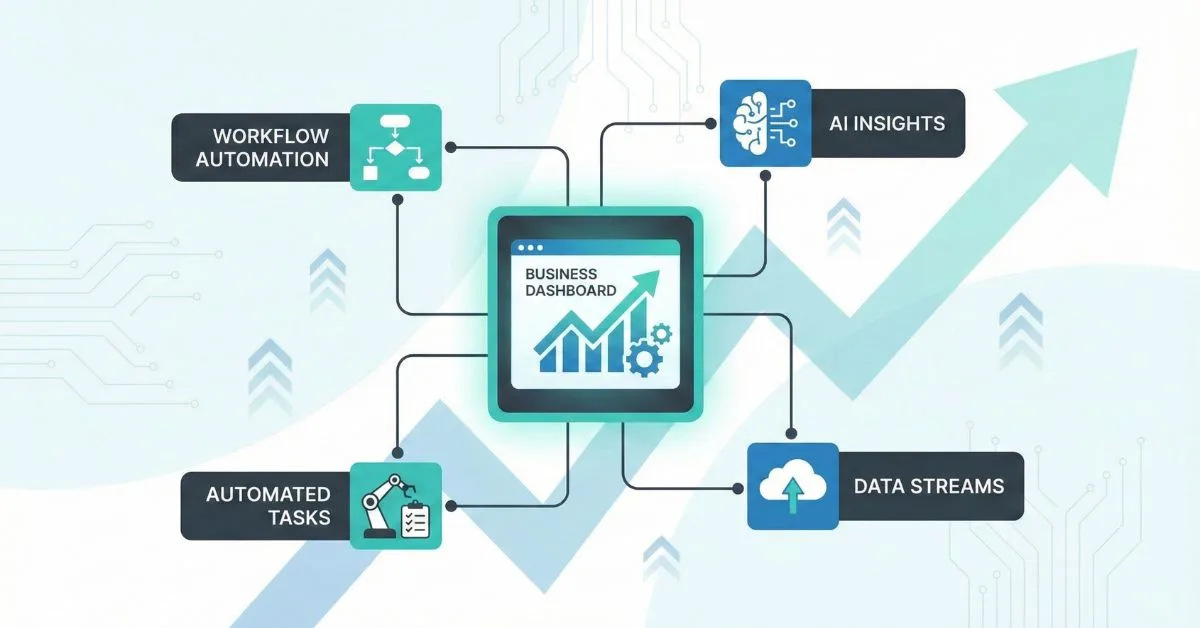
Many growing businesses still depend on spreadsheets, WhatsApp, email, and manual approvals to run daily operations. These tools are useful at the beginning, but they often become a bottleneck as the business grows. This article explains how custom software development and AI automation help companies improve efficiency, reduce errors, and scale with confidence.
Table of Contents
- The Problem: Manual Processes Do Not Scale
- The Hidden Cost of Running a Business on Spreadsheets
- Why Custom Software Matters for Growing Companies
- Where AI Automation Adds Real Business Value
- The Best Systems Combine Software, Automation, and Integration
- Signs Your Business Is Ready for Custom Software
- How to Start Without Overcomplicating the Project
- Why Work With Statum Company Ltd
- Frequently Asked Questions
The Problem: Manual Processes Do Not Scale
Many businesses do not struggle because they lack customers. They struggle because their internal systems cannot keep up with growth.
At the beginning, spreadsheets, WhatsApp groups, emails, and manual approvals feel practical. They are cheap, familiar, and easy to start with. A finance officer tracks payments in Excel. A sales team follows up leads on WhatsApp. An operations manager approves requests by email. A director asks for weekly reports from different departments.
This can work for a small team.
Then the business grows.
More customers come in. More staff are hired. More transactions happen daily. More approvals are needed. More reports are requested. Suddenly, the same tools that helped the company start become the reason work is slow, errors increase, and managers cannot see what is happening in real time.
That is usually the point where custom software and AI automation stop being “nice to have” and become a serious business advantage.
The Hidden Cost of Running a Business on Spreadsheets
Manual work is expensive, even when it does not appear directly on an invoice.
A company may not immediately notice the cost of employees copying data from one system to another, preparing reports by hand, searching through emails, or following up approvals manually. But over time, these small inefficiencies become serious operational problems.
Common signs include:
- Different departments working with different versions of the same data.
- Reports taking hours or days to prepare.
- Approvals getting stuck because one person is unavailable.
- Customer requests being missed or delayed.
- Teams spending more time updating spreadsheets than serving customers.
- Management making decisions using outdated information.
- Employees repeating the same tasks every day.
- No clear audit trail for approvals, payments, or customer issues.
For growing businesses, this creates a ceiling. The company may have demand, but its operations cannot scale.
The real cost is not just lost time. It is also lost visibility, lost revenue opportunities, customer frustration, staff burnout, and poor decision-making.
Why This Matters Now
Businesses are operating in a more digital market than ever before. Customers expect faster service, better communication, and reliable digital experiences. Internal teams also expect tools that help them work efficiently instead of forcing them to repeat manual tasks.
Kenya’s digital activity continues to grow. DataReportal reported 68.8 million cellular mobile connections in Kenya in early 2025, equivalent to 121% of the population, showing how connected the market has become. DataReportal’s 2026 Kenya report also estimated 23.4 million internet users in Kenya in October 2025, with internet penetration at 40.5% of the total population.
At the same time, AI is moving from experimentation into real business operations. McKinsey’s 2025 global AI survey reported that 78% of respondents said their organizations use AI in at least one business function, up from 72% in early 2024 and 55% a year earlier.
Gartner’s 2026 technology trends also highlight the growing role of multiagent systems and domain-specific language models in automation, scalability, and industry-specific AI use cases.
The message is clear: companies that modernize their internal systems early will be better positioned to compete.
Why Custom Software Matters for Growing Companies
Custom software is not just about building an app, dashboard, or website. It is about designing a system around how your business actually works.
Good software should simplify operations, reduce unnecessary steps, and give teams better control over daily work.
A well-designed custom software platform can help your business:
- Track customer requests from start to finish.
- Automate approval workflows.
- Manage inventory, sales, payments, and reporting in one place.
- Integrate with payment providers, SMS gateways, accounting tools, CRMs, or ERPs.
- Give managers real-time dashboards instead of waiting for manual reports.
- Reduce dependency on scattered spreadsheets and informal communication.
- Improve compliance through audit trails and user permissions.
- Reduce operational risk by standardizing business processes.
This is where custom software becomes more than a technology project. It becomes a business growth tool.
For example, instead of asking different departments to send weekly Excel reports, a custom system can provide live dashboards showing sales, payments, pending approvals, customer issues, and operational performance.
Instead of following up manually on every approval, the system can route requests automatically, notify the right people, and record every action for accountability.
Instead of copying payment records into another system, integrations can move data automatically and reduce human error.
Where AI Automation Adds Real Business Value
AI becomes powerful when it is connected to the right business process.
For most companies, the best starting point is not replacing people. It is helping teams work faster, reduce repetitive work, and make better decisions.
Here are practical areas where AI automation for business can create value.
1. Customer Support Automation
AI assistants can help answer common customer questions, classify requests, summarize issues, and route tickets to the right team.
This improves response time and helps customer support teams focus on complex issues that need human attention.
2. Document Processing
Many businesses still process invoices, forms, contracts, applications, and reports manually.
AI can help extract useful information from documents, classify records, detect missing fields, and prepare data for approval or entry into another system.
3. Sales and Lead Management
AI can help sales teams prioritize leads, summarize customer interactions, recommend follow-up actions, and identify opportunities that may be missed in manual tracking.
This is especially useful for businesses that receive leads from websites, WhatsApp, social media, field agents, or partner channels.
4. Internal Knowledge Search
Every growing company builds knowledge over time: policies, SOPs, product documents, technical documentation, pricing rules, onboarding guides, and support procedures.
AI-powered search can help staff ask questions and retrieve answers from approved company documents instead of searching through folders, emails, or old chat messages.
5. Reporting and Analytics
AI can help turn raw business data into summaries, trends, and insights.
For example, a manager could ask:
- Which products are moving fastest this month?
- Which customer issues are increasing?
- Which approval process has the biggest delay?
- Which branch or team has the highest workload?
- Which payments failed or need follow-up?
This helps leaders move from reactive decision-making to proactive management.
The Best Systems Combine Software, Automation, and Integration
A common mistake businesses make is buying many disconnected tools.
One system handles sales. Another handles finance. Another handles customer support. Another handles HR. Another handles reports. Over time, the company ends up with digital fragmentation.
The business is “digital,” but the systems do not talk to each other.
This creates a new operational burden. Staff still copy data manually, reports are still inconsistent, and managers still struggle to get a complete view of the business.
The better approach is to build or implement systems that integrate properly.
A payment should update the customer record. A customer request should trigger the right workflow. An approval should notify the next person. A report should pull from trusted data sources. A manager should see live operational data without waiting for someone to prepare a spreadsheet.
A good enterprise software system should be:
- Secure from the beginning.
- Easy to maintain.
- Scalable as usage grows.
- Integrated with existing business tools.
- Simple enough for teams to actually use.
- Built around real workflows, not assumptions.
- Designed with reporting and auditability in mind.
- Flexible enough to support future business changes.
This is where experienced software engineering matters.
Signs Your Business Is Ready for Custom Software
Your business may be ready for custom software development or workflow automation if you notice any of these signs:
- Your team depends heavily on spreadsheets for daily operations.
- Reports take too long to prepare.
- Customers complain about delays or inconsistent service.
- Approvals depend on manual follow-ups.
- Staff copy the same data into multiple systems.
- Management cannot see real-time performance.
- You have many tools, but they are not integrated.
- Errors are increasing as transaction volumes grow.
- Compliance or audit tracking is becoming difficult.
- You want to scale, but your internal processes are slowing you down.
If several of these sound familiar, the issue may not be your people. The issue may be that your business has outgrown its tools.
How to Start Without Overcomplicating the Project
Digital transformation does not have to begin with a huge project.
In many cases, the smartest approach is to identify one painful process and improve it first.
Start by asking:
- Which process wastes the most time every week?
- Which reports are still prepared manually?
- Where do approvals often get stuck?
- Which customer complaints keep repeating?
- Which data is copied between systems?
- Which task would save the most money if automated?
- Which process would improve customer experience if it became faster?
From there, the business can build a focused solution, measure results, and expand gradually.
This approach reduces risk and creates quick wins.
For example, a company could start with an approval workflow system, then add reporting dashboards, then integrate payments, then add AI-assisted document processing or customer support automation.
The goal is not to automate everything at once. The goal is to modernize the business in a structured and sustainable way.
Why Work With Statum Company Ltd
Statum Company Ltd is a Kenyan software engineering company that helps organisations build practical, scalable, and secure digital systems.
We focus on:
- Custom software development
- Workflow automation
- Enterprise software solutions
- SaaS application development
- System integrations
- Digital transformation consulting
- AI-powered business automation
Our approach is simple: understand the business process first, then build technology that supports real operations.
We do not believe in adding unnecessary features. We believe in building systems that are lean, reliable, secure, and useful from day one.
Whether your company needs to replace spreadsheets, automate approvals, integrate business systems, build a customer portal, or explore AI automation, Statum can help you design and build the right solution.
Final Thoughts
Spreadsheets are useful. WhatsApp is useful. Email is useful.
But they should not be the backbone of a growing business.
As operations become more complex, companies need systems that provide visibility, speed, accuracy, and control. Custom software and AI automation give businesses the ability to scale without creating unnecessary operational chaos.
The businesses that win in the next few years will not simply be the ones using technology. They will be the ones using the right technology to solve the right problems.
Ready to modernize your business operations?
Talk to Statum Company Ltd about building custom software, automating workflows, and integrating your business systems for growth.
Frequently Asked Questions
What is custom software development?
Custom software development is the process of designing and building software specifically for the needs of a particular business. Unlike off-the-shelf software, custom software is built around your workflows, users, data, and growth plans.
How can AI automation help my business?
AI automation can help reduce repetitive manual work, improve customer support, process documents faster, summarize data, support decision-making, and help teams find information quickly.
Is custom software better than off-the-shelf software?
It depends on the business need. Off-the-shelf software can work well for standard processes. Custom software is better when your business has unique workflows, integration needs, compliance requirements, or scaling challenges that generic tools cannot handle properly.
When should a company move away from spreadsheets?
A company should consider moving away from spreadsheets when data becomes difficult to manage, reports take too long, errors increase, approvals are delayed, or different teams rely on different versions of the same information.
Can small and medium businesses benefit from workflow automation?
Yes. Small and medium businesses can benefit greatly from workflow automation because it helps teams save time, reduce errors, improve accountability, and serve customers faster without immediately increasing headcount.
Does Statum build AI-powered business systems?
Yes. Statum Company Ltd helps organisations design and build software systems, workflow automation platforms, integrations, and AI-powered business automation solutions that solve practical operational problems.
Bob Mwenda
Writers and software engineers at Statum sharing insights on cloud infrastructure, backend services, mobile apps, and developer productivity.